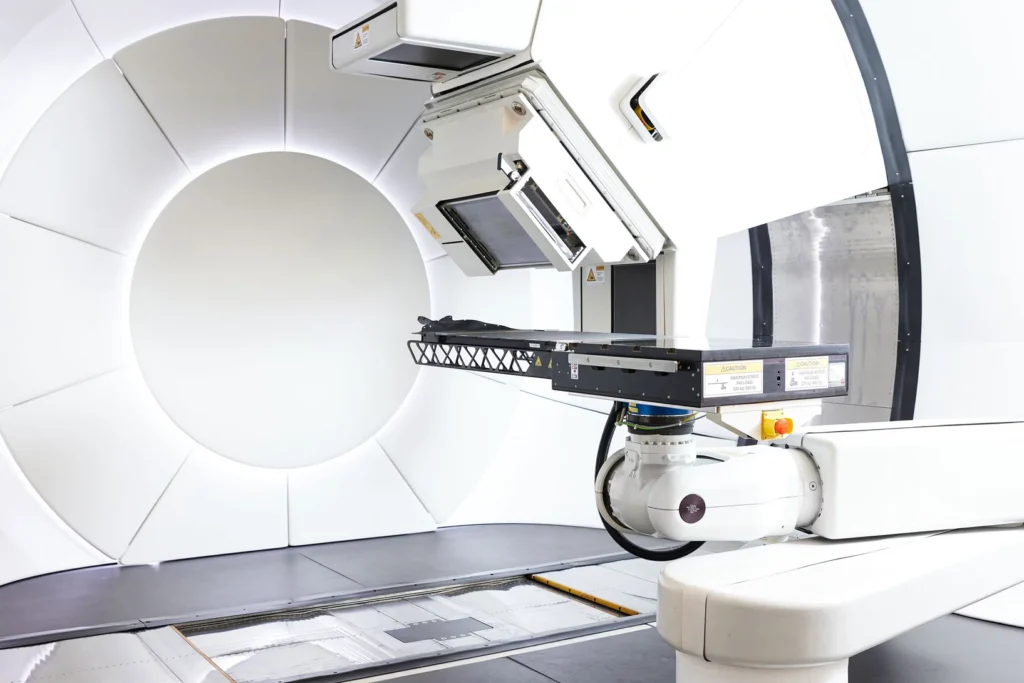
Content provided by hospital



Recent scientific publications highlight the potential benefits of proton therapy for adult cancer patients. Studies indicate that proton therapy offers more precise radiation delivery, reducing exposure to surrounding healthy tissues and minimizing severe side effects compared to traditional photon therapy. It is particularly beneficial for treating intracranial malignancies, mediastinal lymphomas, and cancers in adolescents and young adults. Research also suggests improved quality of life due to fewer treatment-related toxicities. However, further studies are needed to conclusively establish its superiority in survival outcomes. As technology advances, proton therapy is expected to play a growing role in adult oncology care.

Proton therapy is used to treat a variety of cancers and some noncancerous tumors. It may be administered as a standalone treatment or in combination with other therapies such as surgery, chemotherapy, or traditional radiation. Additionally, proton therapy is sometimes considered when cancer persists or recurs after conventional X-ray radiation.
Conditions Treated with Proton Therapy:
Proton therapy is particularly beneficial for cancers located near critical organs and structures, where precision is crucial to minimize damage to surrounding tissues. It is commonly used to treat:
Learn more about indicactions for proton therapy reading our article.

Ongoing clinical trials are investigating the effectiveness of proton therapy for various cancer types, including gastrointestinal cancers, gynecological cancers, and more complex head and neck cancers. Research is also exploring the use of advanced techniques like intensity-modulated proton therapy (IMPT), which allows for even greater precision in dose delivery.
As technology advances and more proton therapy centers are established, it is anticipated that accessibility will improve, making this cutting-edge treatment available to a broader population.
Proton therapy represents a significant step forward in cancer treatment, offering hope for improved outcomes and a better quality of life for patients.
Resources:
How proton therapy fits into the management of adult intracranial tumors
Is Proton Therapy Safer than Traditional Radiation?
Fill out the form and we will contact you shortly
Protontherapy.help provides a consultation service with a general practitioner.
During the consultation, the specialist conducts an initial assessment of your medical case for compliance with the main criteria for proton therapy and answers basic questions.
The service is provided free of charge and does not impose any obligations on the patient.
To receive an individual treatment plan, a consultation with a radiation oncologist is required, this service may be paid, depending on the conditions of the proton therapy center you have chosen.