About proton therapy

    • Protontherapy.help
    • Quironsalud Proton Therapy Centre
      • Brain Cancer
      • Laryngela carcinoma
      • Proton therapy
      • Technology
        • Dr. Walter Armando Vasquez Rivas
        Quironsalud Proton Therapy Centre

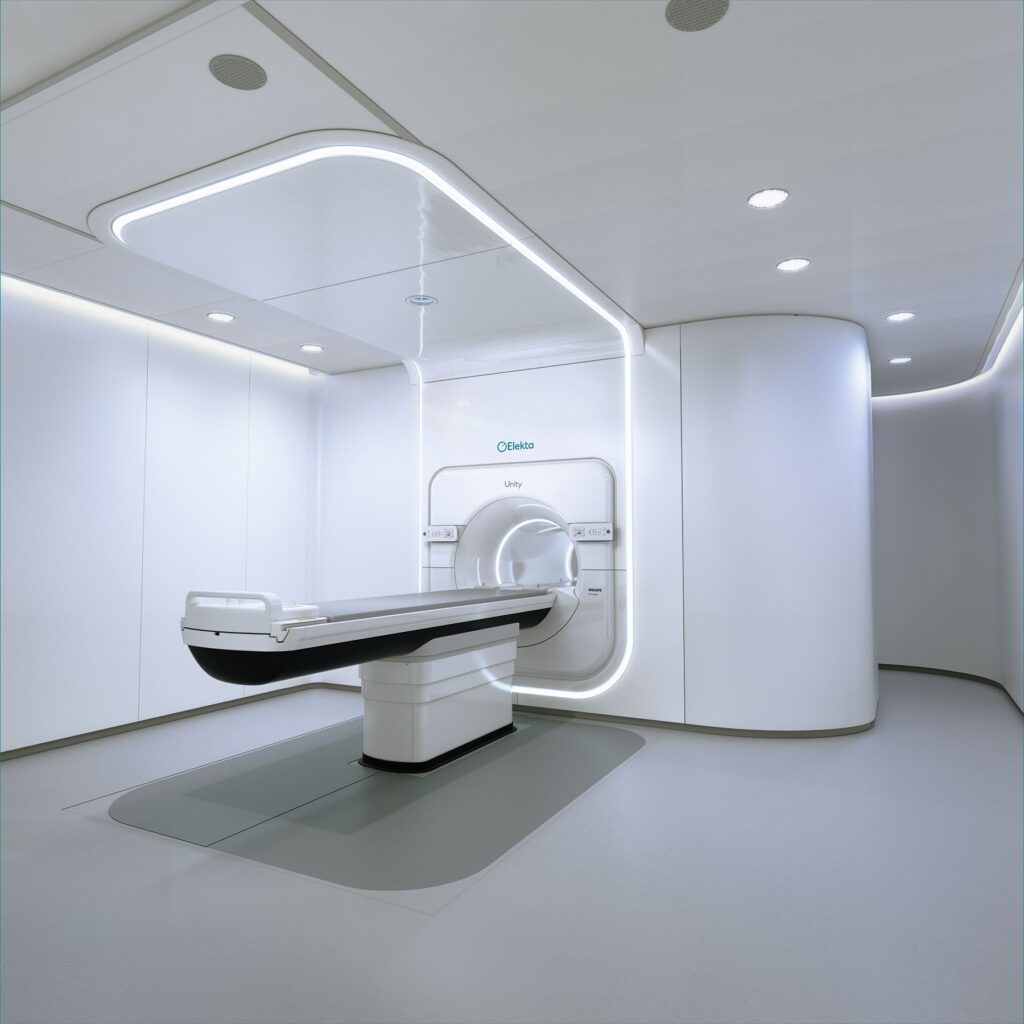
        MR-LINAC: Advanced Radiation Therapy

        MR-LINAC (Magnetic Resonance Linear Accelerator) represents one of the most significant innovations in modern radiation oncology. This technology integrates high-resolution MRI imaging with a linear accelerator, enabling clinicians to visualize tumors in real time during radiation delivery.
        Unlike conventional radiotherapy, where imaging is typically performed before treatment, MR-LINAC allows continuous soft-tissue visualization throughout each session. This enables adaptive, highly personalized treatment.

        Proton Therapy in Laryngeal Carcinoma: Overview

        Introduction Laryngeal carcinoma arises within the larynx, an organ that plays an essential role in phonation, deglutition, and airway protection. Beyond its oncologic implications, disease in this area substantially affects quality of life. Conventional external beam radiotherapy (EBRT) remains a standard modality, yet this standard photon-based (X-ray or gamma-radiation) techniques inevitably deliver radiation to adjacent […]

        • Proton Therapy for Brain Cancer: Overview

          What is Proton Therapy and Why is it Used for Brain Cancer? Proton therapy is a highly sophisticated form of radiation therapy that employs protons—positively charged atomic particles—instead of conventional X-rays to eliminate malignant cells. It is particularly advantageous in proton brain cancer treatment because: It delivers radiation with extreme precision, targeting the tumor while […]

        • Terapia de protones en adultos

          Proton therapy in adults

          Recent scientific publications highlight the potential benefits of proton therapy for adult cancer patients. Studies indicate that proton therapy offers more precise radiation delivery, reducing exposure to surrounding healthy tissues and minimizing severe side effects compared to traditional photon therapy. It is particularly beneficial for treating intracranial malignancies, mediastinal lymphomas, and cancers in adolescents and young adults. Research also suggests improved quality of life due to fewer treatment-related toxicities. However, further studies are needed to conclusively establish its superiority in survival outcomes. As technology advances, proton therapy is expected to play a growing role in adult oncology care.

        • Indicaciones para terapia de protones

          Indications for proton therapy

          Proton therapy is the most precise and safest method of radiation therapy, so it can be recommended for all patients who need such treatment.
          However, due to the limited availability and high cost of proton therapy, there are criteria for dividing patients into groups.

        • Protonterapia en niños

          Proton therapy for children

          According to the Lancet journal, more than 300,000 children worldwide are diagnosed with cancer for the first time every year. The most common types of cancer in children are leukemia (31%), brain tumors (24%) and lymphomas (11%).

        • protonterapia

          What is proton therapy?

          Proton therapy is the most precise and effective method of radiation therapy, which is based on the use of positively charged particles, protons, instead of X-rays.
          This method allows for painless targeting of the tumor with radiation energy and halting its growth.

        • ¿Cómo funciona la terapia de protones

          How does proton therapy work?

          The basis of the therapeutic action of the proton therapy is the penetration of radiation energy into the tumor cell and the destruction of its DNA. This leads to the cessation of tumor cell division and the cessation of its growth.

        • Ventajas y desventajas de la terapia de protones

          Advantages and disadvantages of proton therapy

          Proton therapy is the most effective and safest method of radiation therapy available today.
          The primary advantage of proton therapy is its minimal impact on healthy tissues, reducing the risk of developing secondary cancer in the future.